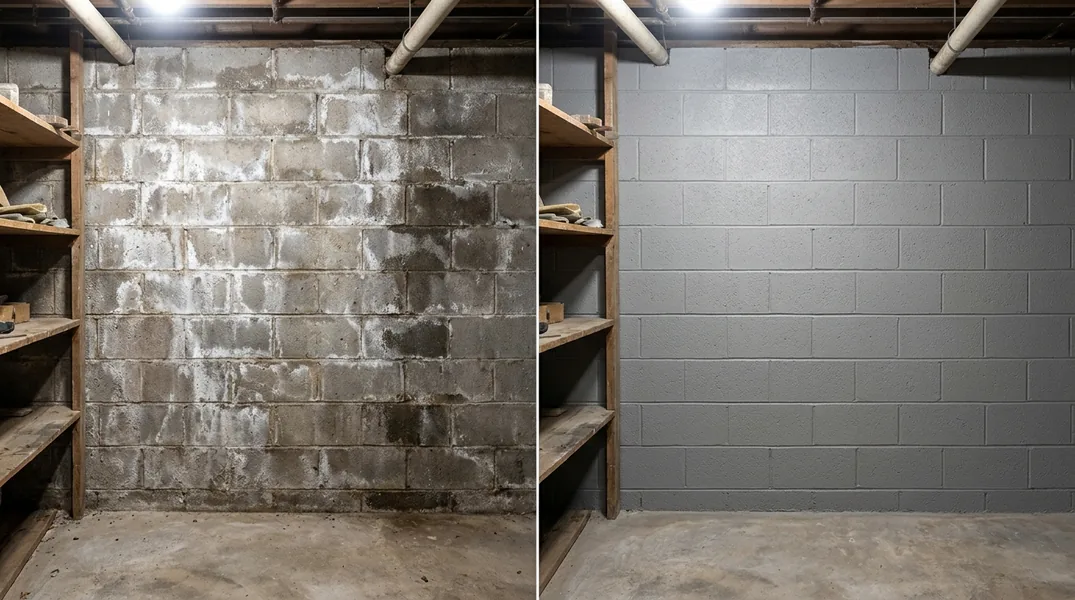
What Hurricane Floyd Taught Rocky Mount About Flood Risk
In September 1999, Hurricane Floyd dumped more than a foot of rain across eastern North Carolina in a matter of hours, and the Tar River rose far beyond anything long-time residents had seen. Low-lying neighborhoods in Rocky Mount were inundated, and thousands of homes took on water that had nothing to do with a roof leak or a broken pipe. For many families, the lesson was simple and sobering: when the Tar River swells, a lower level can become the first casualty of the house.
More than two decades later, that lesson still matters. Flood maps have been redrawn, drainage patterns have shifted with new development, and heavy rain events seem to arrive with more intensity. Homeowners who bought after Floyd may not realize how quickly a saturated water table can push moisture through a foundation. Understanding that history is the first step toward protecting a basement, crawlspace, or ground-level room from the kind of water damage that took weeks to clean up in 1999.
How Tar River Flooding Reaches a Lower Level
River flooding is only part of the story. When the Tar River overtops its banks, water does not simply stay in the channel. It backs up through storm drains, saturates the soil for blocks around, and raises the groundwater level beneath homes that are nowhere near the waterfront. That rising groundwater exerts hydrostatic pressure against foundation walls, and water finds the weakest point: a hairline crack, a cold joint, a deteriorated footer drain, or a window well that was never designed for standing water.
This is why a basement can flood even on a hill or several streets away from the river. Once the soil around a foundation is fully saturated, it behaves like a sponge, and any gap becomes an entry point. Homeowners in Tarboro and other Tar River communities have seen the same pattern. The fix is rarely a single product. It is a system that manages water before it reaches the wall and removes it after it does.
Flooded Lower Level Cleanup: What to Do in the First 48 Hours
If water has already entered a lower level, the clock starts immediately. Standing water and damp materials create the conditions for mold growth within 24 to 48 hours, and that mold can spread into framing, insulation, and drywall. The first priorities are safety and speed: shut off electricity to the affected area, document the damage for insurance, and remove water with a pump or wet vacuum. Anything porous that soaked up floodwater, including carpet, padding, and cardboard, usually needs to go.
After the bulk water is gone, the space needs aggressive drying with fans and dehumidifiers, and the foundation itself should be inspected for cracks or openings that let the water in. Flooded lower level cleanup is not just about making the room look dry. It is about confirming that the structure and the air quality are safe before the space is used again. A professional assessment can identify hidden moisture and the entry points that will let the next storm do the same damage.
Flood Prevention Starts With Basement Waterproofing Near Me
Flood prevention for a lower level is really water management, and it works best when it addresses both the outside and the inside of the foundation. Basement Waterproofing is the umbrella term for that work, and it typically combines exterior drainage, interior collection, and sealing. On the exterior, the goal is to move roof and surface water away from the walls and to relieve pressure against the foundation before it builds. Exterior Basement Waterproofing can include regrading, extending downspouts, repairing or installing footing drains, and applying membrane or coating to the foundation walls.
On the inside, an Interior Drain Tile System captures water that makes it through or under the wall and routes it to a sump pump, which discharges it away from the house. This is the safety net for the water you cannot stop, and it is especially valuable in a river town where the water table can rise fast. Together, exterior and interior measures form a layered defense, and that is what Foundation Waterproofing looks like in practice. If you are searching for basement waterproofing near me and want a straight answer about what your home needs, call Rocky Mount Waterproofing at (252) 888-5455.
Basement Waterproofing Cost in Rocky Mount: What to Budget
Homeowners often ask what waterproofing will run, and the honest answer is that it depends on the size of the space, the type of foundation, and how much water the system needs to handle. A single crack injection is a small project. A full interior drain tile system with a sump pump is a larger one. Exterior work that involves excavation and drainage corrections sits somewhere in between or above, depending on access and the length of the foundation. Because every house sits on different soil and drains differently, a firm number only comes from an on-site evaluation.
What you can control is the quality of the diagnosis. A contractor who inspects the exterior grade, the gutters, the foundation walls, and the interior floor before recommending a solution is more likely to give you a fix that lasts. Rocky Mount Waterproofing provides a free estimate so you can see the scope and the pricing before committing. It also helps to ask whether the work includes a warranty and a maintenance plan, since a sump pump and drain system need occasional checks to keep performing during a heavy storm.
Building a Flood-Ready Home in the Tar River Basin
Flood readiness is a habit as much as a construction project. Keep gutters clear, make sure the ground slopes away from the foundation, and test the sump pump before hurricane season. If your lower level has finished rooms, store valuables and important documents above the flood line and consider water sensors that alert you when moisture appears. These small steps buy time, and in a flood, time is what limits damage.
Rocky Mount has rebuilt and adapted since Floyd, and homeowners here know better than most that the Tar River deserves respect. Whether you need a first-time assessment or an upgrade to an older system, Rocky Mount Waterproofing serves homeowners across Rocky Mount, Wilson, Nashville, and Tarboro. Call (252) 888-5455 or request a free estimate to start protecting your lower level before the next big rain.
Looking for a professional basement waterproofing contractor in Rocky Mount? Rocky Mount Waterproofing responds fast for all your basement waterproofing needs.
Get a Free QuoteOur services: Basement Waterproofing · Interior Drain Tile System · Exterior Basement Waterproofing